
Wellness
Lessons I Learned from My Yoga Teacher Training Course in Kerala

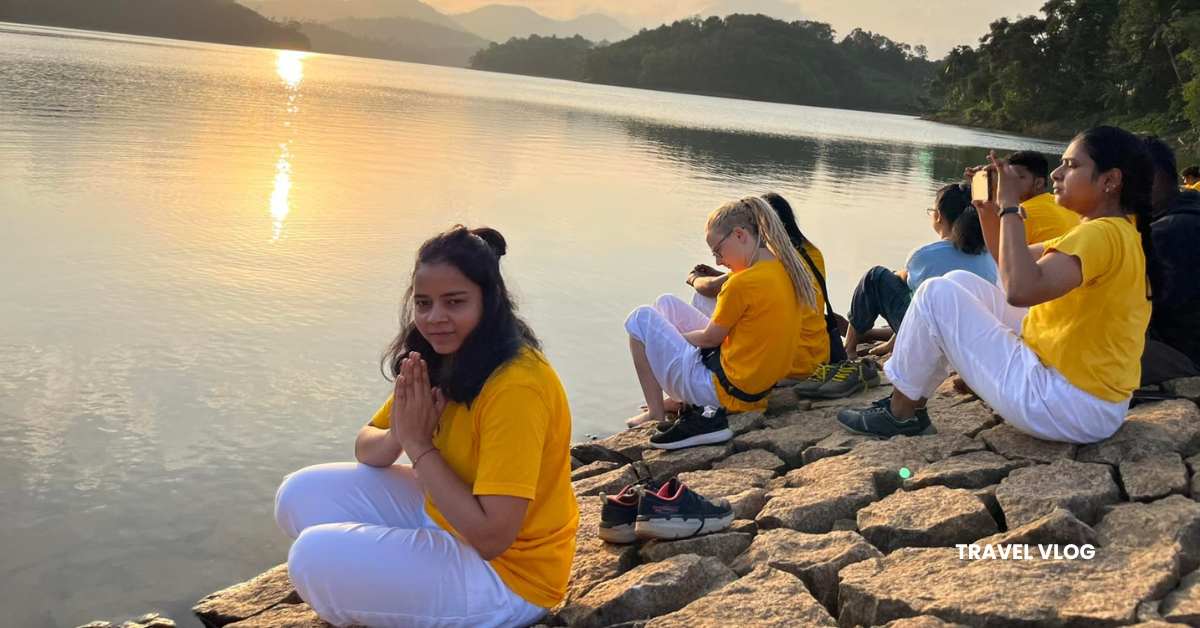
My personal experience of a 30-day Yoga Teacher Training in Kerala at Sivananda Ashram. Lessons on discipline, silence, selfless service, and spiritual growth.
In March 2022, while sitting at my office desk, a sudden thought crossed my mind. I needed a break from corporate life. Not just a vacation, but something meaningful that could slow me down from within.
I was not burned out because of work. I was tired of noise, expectations, and constant interactions. I wanted space. I wanted silence. Most importantly, I wanted to reconnect with myself.
Why I Quit My Corporate Job for Yoga Teacher Training in Kerala
Before COVID, life felt structured. I had a routine. Office, home, family time, and yoga practice whenever I could. Yoga had already entered my life through my first teacher, who studied in Kerala. That seed was planted long ago.
After COVID, everything changed. Workload increased. There was no house help. Stress slowly built up. I was grateful to have a job, but I felt disconnected from myself.
After almost two and a half years of internal struggle, I decided to resign and join a 30-day Yoga Teacher Training Course in Kerala at Sivananda Ashram.
I enrolled, booked my flight, and prepared to begin a new chapter.
First Impressions of the Sivananda Ashram in Kerala

Sivananda ashram entrance
About 70 students joined the program from across India and different countries. I reached a day before the course started. Three other students from Delhi shared the cab with me from the airport.
The ashram was located near a lake, away from city life. My first reaction was doubt. How would I survive 30 days here?
I was assigned a dormitory with around 25 to 30 girls. It was my first time living in a shared dorm. That night, sleep did not come easily. We were instructed to wake up at 5 AM.
Daily Routine During Yoga Teacher Training in Kerala
5:20 AM – Wake up bell
6:00 AM – Meditation and chanting
7:30 AM – Tea
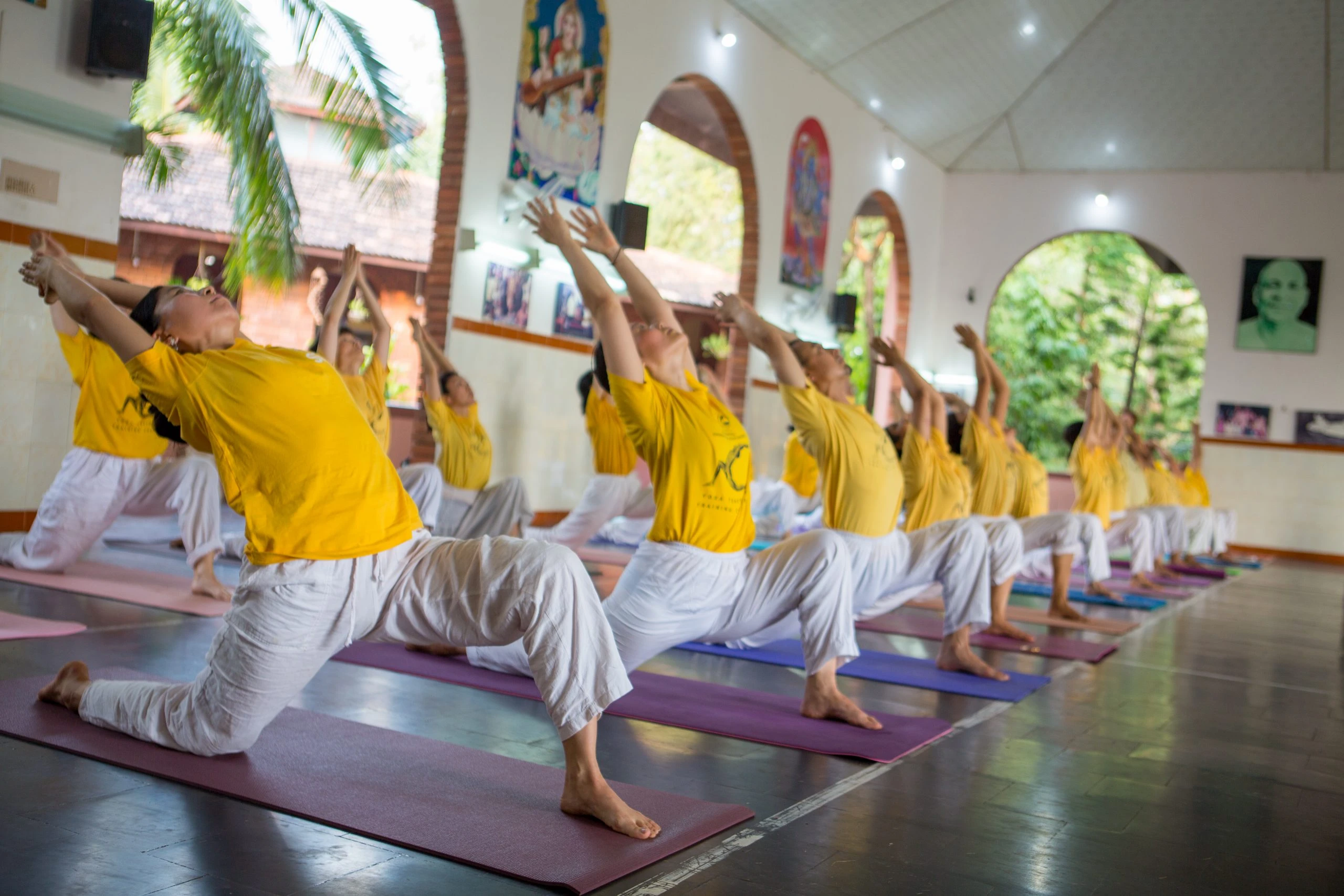
8:00 AM to 10:00 AM – Yoga asana practice and theory
10:00 AM – Lunch
11:00 AM – Karma Yoga
12:00 PM – Bhagavad Gita and Bhajan classes
2:00 PM to 4:00 PM – Anatomy and philosophy
4:00 PM to 6:00 PM – Evening yoga session
6:00 PM – Dinner
8:00 PM – Meditation and Satsang
10:30 PM – Lights out
Life was disciplined and structured. There were only two main meals a day. No social media. Limited phone calls. Simplicity became the norm.
8 Powerful Lessons I Learned from My 30 Days in Ashram
1. You Can Survive with Less Than You Think
Before joining the Yoga Teacher Training in Kerala, one of my biggest fears was food. We were told that only two main meals would be served daily. Coming from a metro city lifestyle where snacking had become routine, I doubted whether I would manage.
The first few days were uncomfortable. My body craved what it was used to. But slowly, something shifted. I realized that most of my hunger was mental, not physical. The body adapts quickly when the mind stops resisting. Eating simple Kerala rice, vegetables, and buttermilk every day felt difficult initially, but later it felt nourishing and grounding.
Living with fewer clothes, fewer choices, fewer distractions, and fewer meals taught me that simplicity is not deprivation. It is freedom. I learned that we often consume more than we need, not because we lack, but because we are conditioned to believe we do.
2. The Mind Is Powerful, but It Should Not Be the Master
Yoga practice is not just about stretching the body. It is about observing the mind.
There were moments when holding a posture felt unbearable. My legs would tremble, my breath would feel shallow, and my mind would scream to come out of the pose. But our teachers encouraged us to stay, breathe, and observe.
I realized how often I allow my mind to dictate my limits. In meditation, thoughts would rush endlessly. In theory classes, sitting still required discipline. Slowly, I began to understand that the mind is not meant to control every reaction. It is meant to be trained.
That month, I started building a new relationship with my thoughts. I understood the saying that the mind is a good servant but a dangerous master. When I stopped reacting to every impulse, I felt stronger from within.
3. Selfless Service Softens the Ego
On the first day of Karma Yoga allocation, I silently prayed that I would not be assigned cleaning bathrooms. And that was exactly the duty I received.
Initially, I felt resistance. I questioned why I had to do this. I had left a corporate job, and now I was scrubbing floors and toilets.
But slowly, the resistance melted. Cleaning without expectation of praise or recognition humbled me. It taught me dignity in every task. No work is small when done with awareness.
Karma Yoga helped me understand that ego quietly hides in our preferences. When we remove those preferences, the heart becomes lighter. Serving others without seeking validation was one of the most powerful transformations I experienced.
4. Yoga Is Not Just About Physical Bending
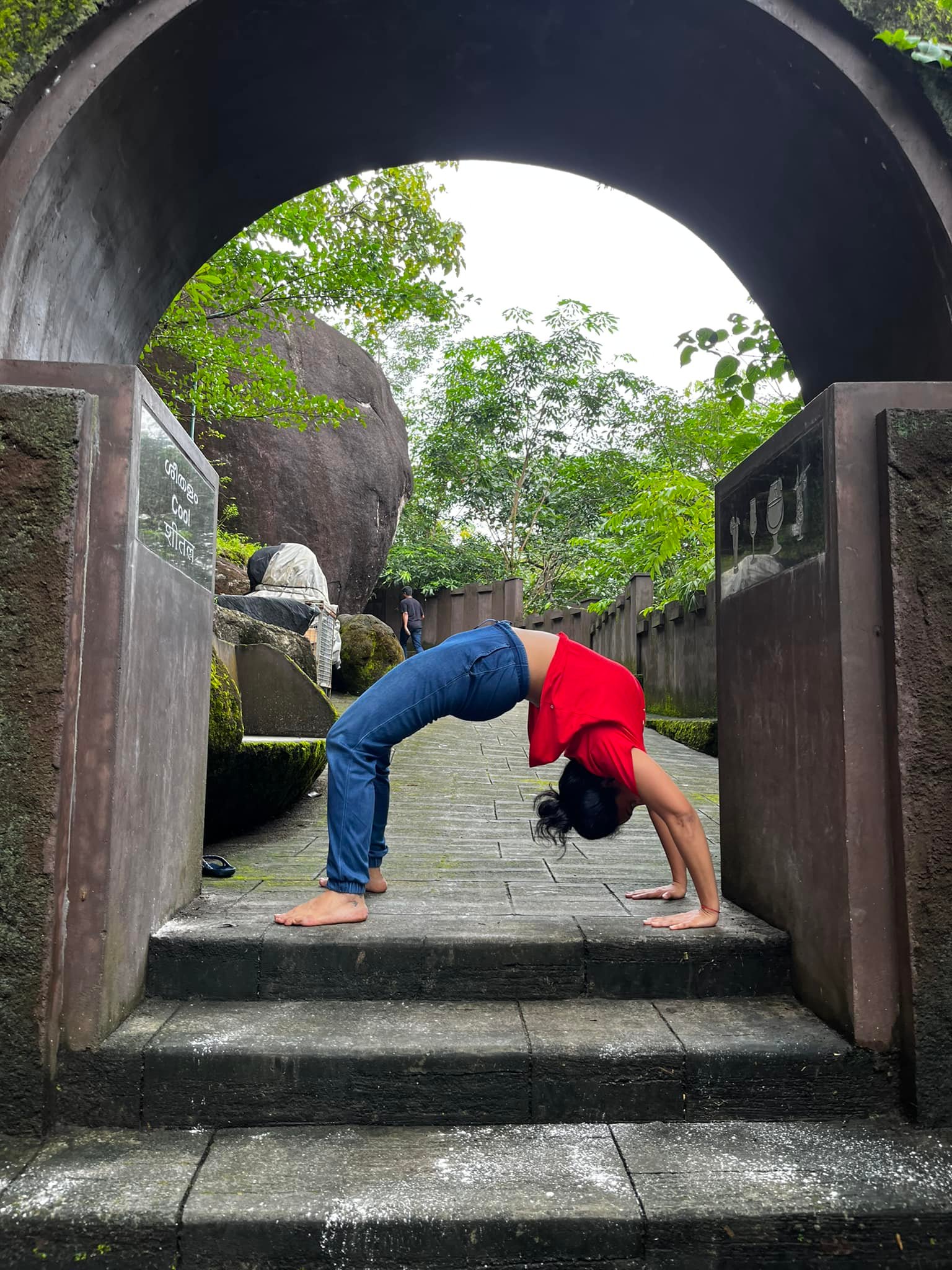
Before joining the course, I thought yoga mastery meant perfect alignment and deeper flexibility. During training, I realized yoga goes far beyond physical postures.
Every forward bend tested my patience. Every backbend tested my courage. Balancing postures tested my mental stability more than physical strength.
When I practiced headstand, I noticed how fear arises even before the body attempts the posture. Yoga revealed that flexibility is not about muscles alone. It is about flexibility in thoughts, reactions, and expectations.
True yoga happens when the body, breath, and mind move together in awareness.
5. Silence Speaks Loudly
Life outside the ashram is filled with constant noise. Phone notifications, conversations, traffic, opinions. In the ashram, silence was natural.
After classes, I would sit quietly near the lake or in the yoga hall. Without social media or continuous communication, I started hearing something subtle within me.
There is an inner voice that only speaks when external noise fades. Silence became a space for clarity. It helped me observe my fears, desires, and patterns without distraction.
I realized that I was not lonely in silence. I was finally meeting myself.
6. Prayer Is Not About Ritual, It Is About Surrender
Before this experience, I was not deeply connected to rituals or structured prayers. I believed in spirituality, but from a distance.
In the ashram, chanting, meditation, Satsang, and mala japa were daily practices. At first, I followed them mechanically. But repetition slowly created connection.
There were evenings when chanting would calm me in ways I could not explain. I stopped asking for outcomes. I started asking for peace and clarity.
Prayer became less about religion and more about surrender. It became a conversation with the universe without expectations.
7. Life Is Fragile and Unpredictable
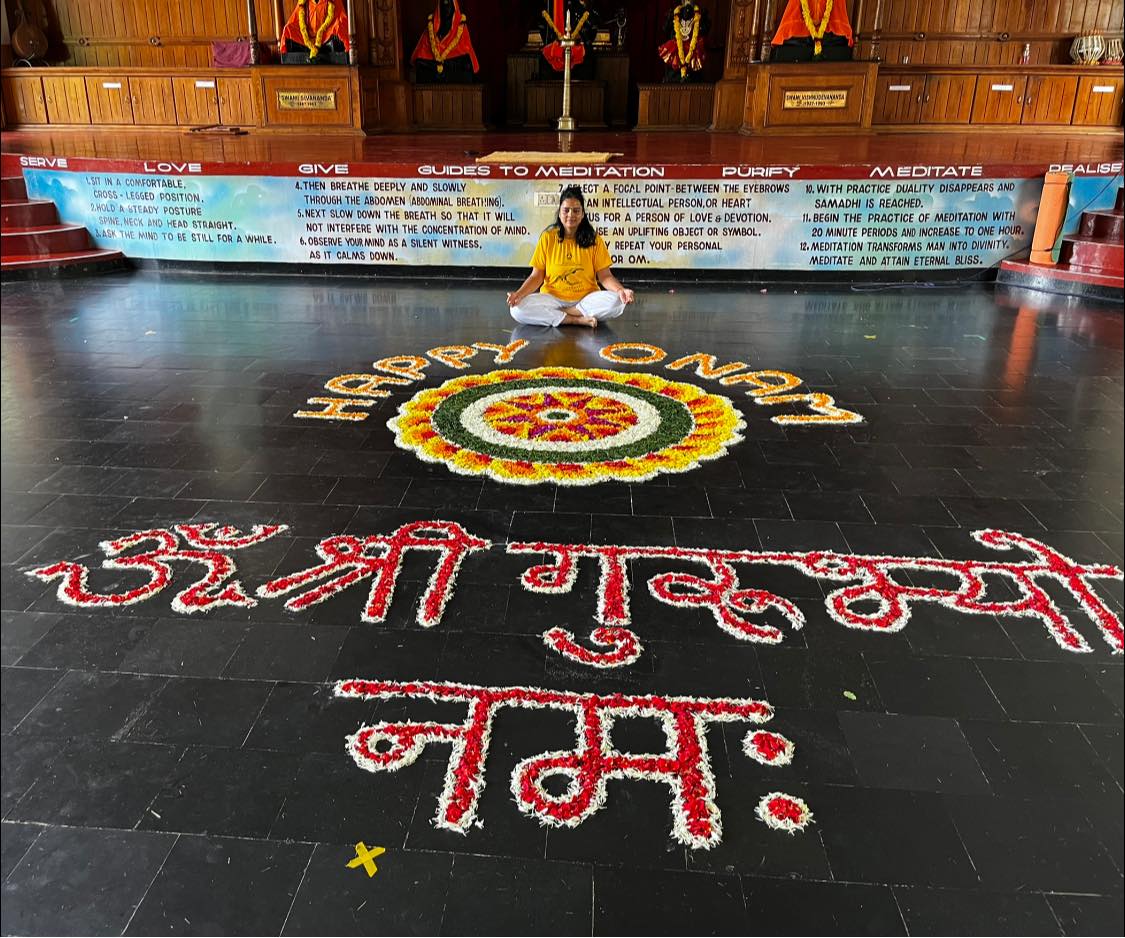
The most painful lesson came on the final day. Just before our graduation ceremony, news spread that one of our batchmates had drowned in the lake near the ashram.
The shock was overwhelming. We had practiced together, studied together, shared meals together. That evening, celebration turned into silence and prayer.
It was a harsh reminder that life does not promise perfect endings. Everything can change in a moment. That experience deepened my gratitude for the present.
I learned that growth is not about chasing achievements. It is about appreciating the time we have.
8. Consistent Hard Work Brings Unexpected Rewards
That final night was emotionally heavy. I packed my bags with mixed feelings. I was leaving a place that had changed me deeply.
The next morning, I was surprised when my batchmates congratulated me. I had topped the course.
I did not expect it. Throughout the month, I simply focused on giving my best in every class, every practice, every assignment. I showed up daily with sincerity.
That result taught me something simple but powerful. When you commit fully to a process without obsessing over the outcome, rewards often arrive quietly.
What This Yoga Teacher Training in India Gave Me
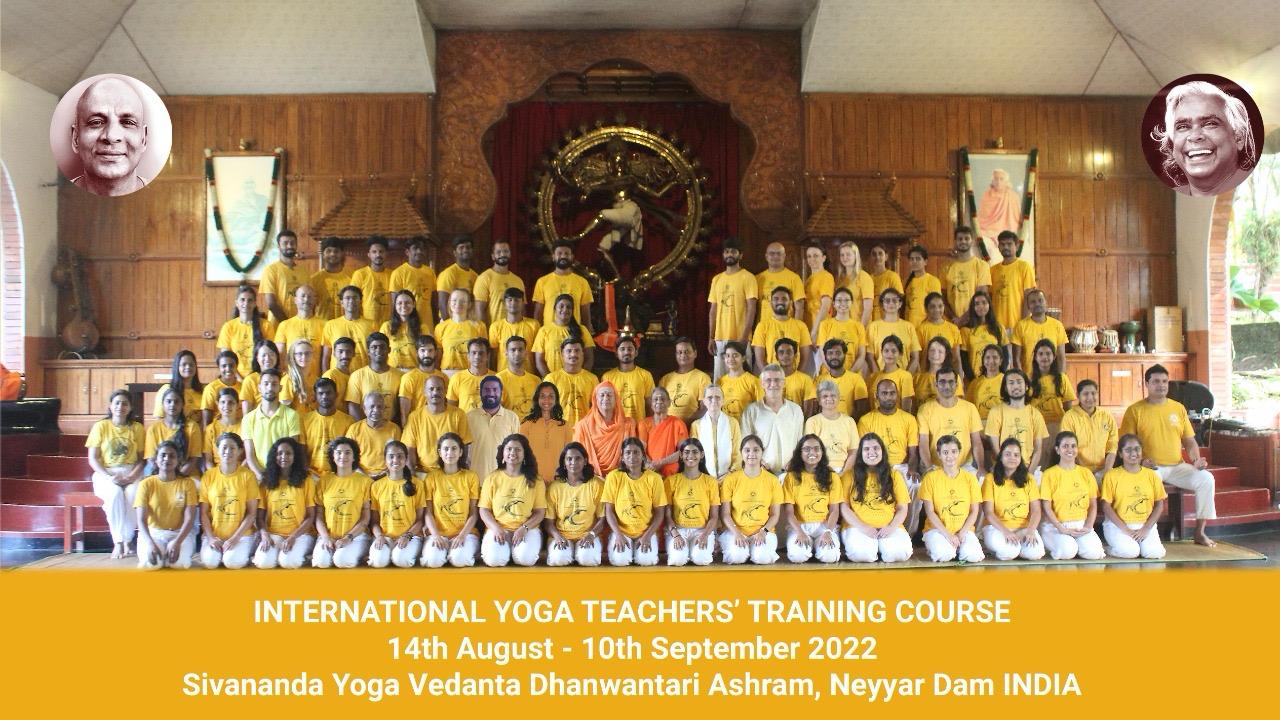
When I look back at those 30 days in Kerala, I realize that the course gave me much more than a certification. It gave me a new lens to look at life.
I arrived at the ashram feeling confused, restless, and slightly broken from the pace of corporate life. I left feeling grounded, clearer, and more connected to myself. The transformation was not loud or dramatic. It was quiet and steady.
This Yoga Teacher Training in India gave me discipline without rigidity. It taught me how to wake up before sunrise and still feel energized. It gave me structure, yet allowed space for introspection. I learned how powerful routine can be when it is aligned with purpose.
It also gave me humility. Cleaning floors, living in a dormitory, eating simple food, and following strict rules removed layers of ego I did not know I was carrying. I understood that growth does not always come from comfort. Sometimes it comes from surrender.
Spiritually, it opened a new door. Meditation stopped being just a practice and became a refuge. Chanting stopped being repetition and became vibration. Silence stopped being emptiness and became guidance.
Emotionally, it made me stronger. The tragic loss of a batchmate reminded me that life is uncertain. That awareness deepened my gratitude for every moment I have.
Academically, it strengthened my foundation in yoga philosophy, anatomy, and teaching methodology. But more importantly, it strengthened my confidence. Topping the course was not just about grades. It was a reflection of my commitment and sincerity.
This experience gave me lifelong friendships and soulful connections. My dorm mate Mariyam, with her gentle presence, and Vishnu, with his spiritual wisdom, became important parts of this chapter. We may not talk every day, but the energy we shared remains.
Most importantly, this Yoga Teacher Training gave me back to myself.
If life allows, I will return to Kerala again. Not to escape, but to reconnect.
Namaste.
Related: Types of Yoga to Choose From
Frequently Asked Questions About Yoga Teacher Training Course (FAQs)
Is Yoga Teacher Training in Kerala worth it?
Yes. Kerala offers authentic yoga training, spiritual atmosphere, and disciplined learning environments like Sivananda Ashram.
How long is a typical Yoga TTC in India?
Most Yoga Teacher Training Courses in India are 200-hour programs lasting around 28 to 30 days.
Is living in an ashram difficult?
It can feel challenging initially due to discipline and simplicity, but it becomes deeply transformative.
What should I expect in a Sivananda Yoga course?
Structured routine, meditation, chanting, philosophy, asana practice, and selfless service.










Hello there! Welcome to LIFEGRAM, a lifestyle blog about travel, growth, wellness, and all things worth writing!

-
 Download Your Free 30-Day Self-Care Challenge PDF
Original price was: $20.00.$0.00Current price is: $0.00.
Download Your Free 30-Day Self-Care Challenge PDF
Original price was: $20.00.$0.00Current price is: $0.00.
-
 Create Any Habit with the Free Printable Habit Tracker
Original price was: $5.00.$0.00Current price is: $0.00.
Create Any Habit with the Free Printable Habit Tracker
Original price was: $5.00.$0.00Current price is: $0.00.
-
 Start Journaling: Download Your Daily Journal for 2026
Original price was: $20.00.$1.99Current price is: $1.99.
Start Journaling: Download Your Daily Journal for 2026
Original price was: $20.00.$1.99Current price is: $1.99.
-
 Organize Your Week: Download Weekly Planner Now!
Original price was: $5.00.$0.00Current price is: $0.00.
Organize Your Week: Download Weekly Planner Now!
Original price was: $5.00.$0.00Current price is: $0.00.
-

 Journaling3 months ago
31 Best January Journal Prompt Ideas 2026 for Self-Discovery
-

 Journaling2 months ago
February Journal Prompts for Self-Discovery, Growth, and Goal Clarity
-

 Journaling1 month ago
31 Best March Journal Prompts for Self Growth and Productivity
-

 Lifestyle3 months ago
10 Healthy Lifestyle Habits for Busy People (Simple Daily Wellness Routine)
-

 Journaling6 days ago
30 Best April Journal Prompts For Self-Discovery & Personal Growth
-

 Quotes2 months ago
50+ Inspiring Rhonda Byrne Quotes
-

 Travel2 months ago
Pondicherry Solo Trip Experience: When a Vision Board Turned Into Reality
-

 Travel3 months ago
My Vietnam Travel Diary: A Journey of Places, People, and Quiet Connections